Final topic in our 2026 trends series! We've explored strategic ecosystems, AI integration, and participatory experiences. Today, we’re talking about how sustainability evolves from a marketing checkbox to a fundamental business practice that stakeholders can verify and measure.
According to recent research, 84% of consumers say sustainability is a very important factor in their purchase decisions, making authentic environmental and social responsibility essential for event success.
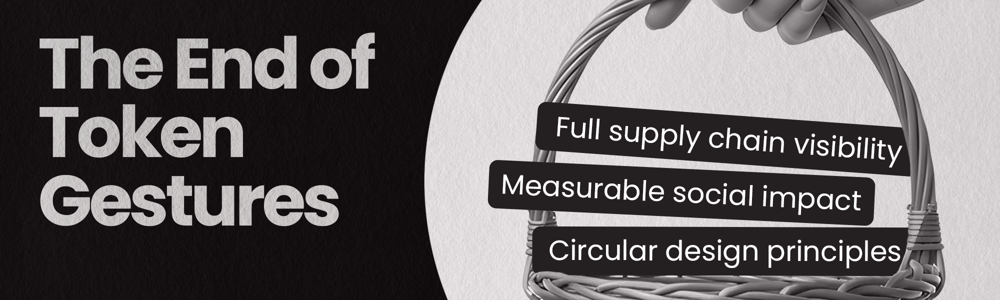
The End of Token Gestures
The era of surface-level sustainability initiatives—such as recycling bins, digital-only programs, and vague environmental commitments—is ending as stakeholders become more sophisticated at identifying authentic impact versus marketing theater. Today's attendees, exhibitors, and investors demand verifiable data and measurable outcomes.
We’re rapidly nearing the end of superficial sustainability efforts. Stakeholders demand radical transparency:
- Full supply chain visibility: Knowing exactly where materials come from and their environmental cost
- Measurable social impact: Concrete data on diversity, accessibility, and community benefit
- Circular design principles: Events designed for reuse, repurposing, and zero waste
What Radical Sustainability Includes
True sustainability extends beyond environmental considerations to encompass social responsibility and economic equity. These three pillars are interconnected—environmental damage often disproportionately affects marginalized communities, while economic inequality undermines long-term sustainability efforts.
The three-pillar approach:
- Environmental stewardship: Carbon footprint measurement with verified offsets, regenerative materials sourcing, waste elimination strategies
- Social responsibility: Inclusive hiring throughout supply chains, accessible venue design, living wage requirements for all workers
- Economic sustainability: Fair pricing for minority-owned vendors, long-term supplier relationships, transparent procurement practices
The Authenticity Test
As sustainability claims become common, stakeholders have developed sophisticated methods for distinguishing genuine efforts from greenwashing. Organizations seeking to build trust must adopt radical transparency and independently verify their claims.
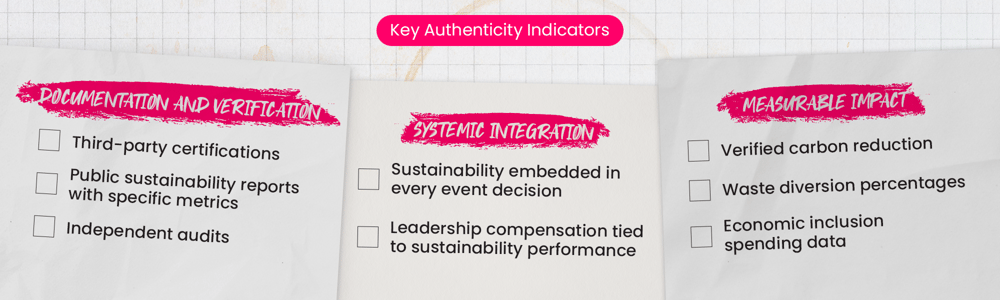
Key authenticity indicators:
- Documentation and verification: Third-party certifications, public sustainability reports with specific metrics, independent audits
- Systemic integration: Sustainability embedded in every event decision, leadership compensation tied to sustainability performance
- Measurable impact: Verified carbon reduction, waste diversion percentages, economic inclusion spending data
Implementation Strategy
The transition to authentic sustainability requires systematic approaches that create measurable change. Organizations must invest in proper measurement systems, build relationships with value-aligned partners, and design processes that prioritize long-term impact over short-term cost savings.
Your sustainability roadmap:
- Start with measurement: Establish baseline metrics using proven frameworks, implement lifecycle tracking systems
- Build authentic partnerships: Vet all vendors for sustainability practices, develop long-term relationships with values-aligned suppliers
- Design for circularity: Create reusable booth designs, plan end-of-life strategies before production, implement attendee behavior change systems
The Bottom Line
In 2026, event sustainability isn't about checking boxes—it's about building trust through transparent, measurable action that creates genuine positive impact.
Brands embracing authentic sustainability will win loyalty and build resilient businesses. Those practicing greenwashing will find themselves isolated as stakeholders demand verifiable change.
Transform your 2026 events from environmental liabilities into positive force multipliers for social and environmental good.
From our research to your sustainable success, Rhiannon Andersen, CMO, Steelhead Productions