


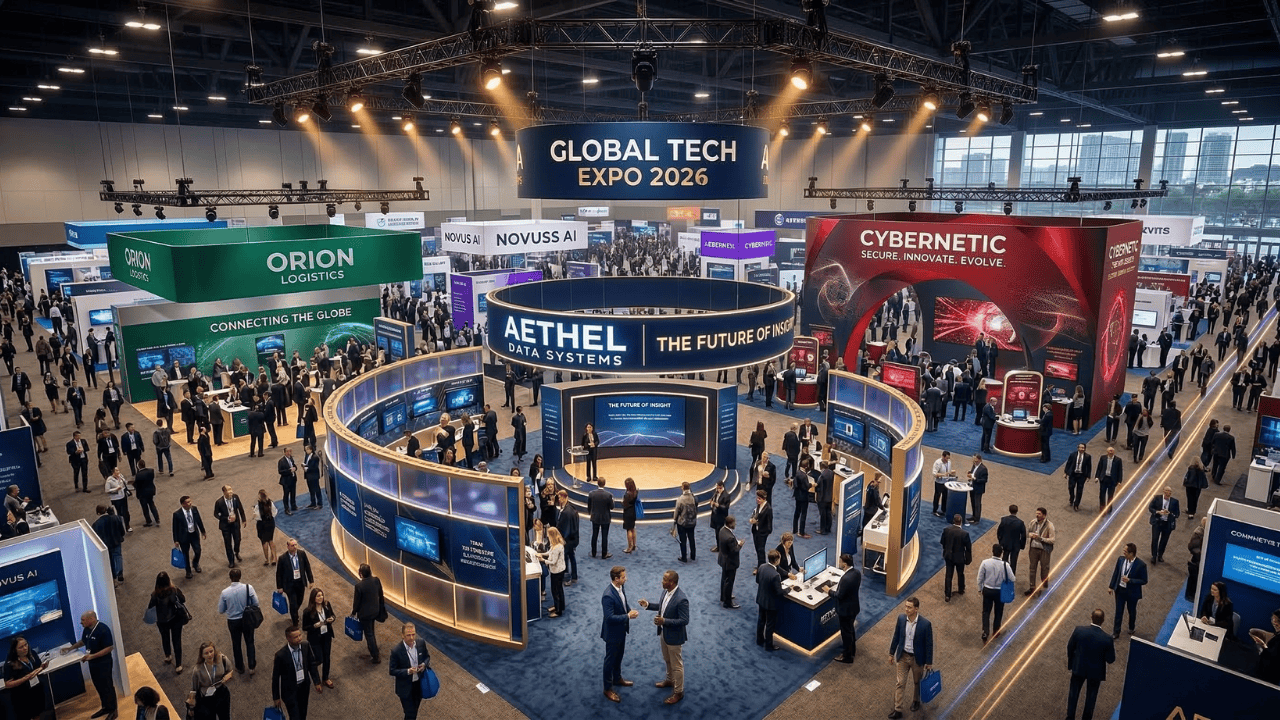
Trade show floors are louder, more crowded, and more competitive than ever. According to the Freeman Trust Report, 77% of attendees say their trust increases after interacting with a brand at a live event. That’s not a vanity metric. For a VP of Marketing responsible for pipeline, brand equity, and measurable ROI, that statistic reinforces a powerful truth:
An experience-driven trade show strategy isn’t a creative add-on. It’s a growth lever.
But “experience” without strategy becomes expensive theater. And strategy without experience becomes forgettable.
This guide breaks down how to build an experience-driven trade show strategy from concept to execution—so your exhibit becomes a measurable business asset, not just a branded structure.
What Is an Experience-Driven Trade Show Strategy?
An experience-driven trade show strategy is a fully integrated approach that aligns exhibit design, messaging, staffing, technology, and post-show follow-up around one goal:
Designing a physical environment that drives measurable business outcomes.
For VPs of Marketing, this means aligning experiential tactics with:
- Pipeline contribution
- Brand perception
- Content amplification
- Account-based marketing (ABM) objectives
- Sales enablement
Experience becomes the delivery mechanism for strategy—not the other way around.
Step 1: Anchor Experience to Business Objectives
Before creative concepts are developed, your experience-driven trade show strategy must answer:
- Are we generating net-new leads or targeting strategic accounts?
- Are we launching a product?
- Are we repositioning the brand?
- Are we deepening existing client relationships?
This is where strategy connects to performance measurement. If you haven’t already defined the right metrics, revisit foundational KPIs in a resource like:
- Trade Show Performance Metrics That Actually Matter
- How to Optimize Trade Show Spend Without Sacrificing Impact
Your experiential concept should be engineered to directly influence those metrics.
Step 2: Design the Environment Around Behavioral Psychology
An effective experience-driven trade show strategy leverages behavioral design principles:
- Curiosity: Open sightlines, layered storytelling, dynamic visuals
- Participation: Interactive touchpoints, demos, tactile engagement
- Social proof: Visible engagement zones, testimonial integration
- Comfort: Lounge-style meeting areas for deeper conversations
This aligns with broader experiential thinking outlined in:
- Experiential Trade Show Marketing Ideas That Actually Drive Engagement
- Brand Storytelling Through Trade Show Experiences
Experience must move attendees from awareness → interaction → conversation → conversion.
Step 3: Align Physical Design with Flexible Exhibit Strategy
For modern marketing leaders managing multi-show calendars, flexibility is essential. A rigid, one-size-fits-all booth undermines an experience-driven trade show strategy.
Instead, consider:
- Modular structures adaptable to various footprints
- Custom exhibit rental solutions for show-to-show reinvention
- Graphics and content refresh cycles aligned with campaign themes
A flexible system ensures your experience evolves without ballooning capital expenditure.
When the physical structure adapts, your marketing strategy gains agility.
Step 4: Integrate Content & PR Into the Experience
Your booth should function as a content engine.
An experience-driven trade show strategy integrates:
- On-site video capture
- Executive interviews
- Live product demos recorded for social
- PR moments aligned with product launches
Freeman research continues to show that attendees actively engage with brands across channels before, during, and after events. Experience isn’t confined to the footprint—it fuels digital amplification.
This is where experiential marketing becomes measurable marketing.
Step 5: Engineer the Staffing Strategy
Even the most immersive design fails without alignment between staff behavior and strategic objectives.
Your experience-driven trade show strategy should include:
- Pre-show training aligned with campaign messaging
- Clear qualification frameworks
- Defined handoff processes between marketing and sales
- Post-show follow-up workflows within CRM
Experience must extend beyond the booth structure into human interaction.
Step 6: Build the Measurement Framework Before the Show
Bottom-of-funnel decision-makers don’t invest in experience for aesthetics. They invest for ROI.
An experience-driven trade show strategy should define:
- Engagement rate (interactions ÷ booth traffic)
- Qualified conversation rate
- Cost per meaningful interaction
- Pipeline influenced
- Revenue attribution
To structure this properly, reference Trade Show Performance Metrics That Actually Matter
Measurement must be designed into the experience—not retrofitted after the show.
Step 7: Plan the Post-Show Continuity
Experience does not end when the carpet rolls up.
An effective experience-driven trade show strategy includes:
- Personalized follow-up within 48 hours
- Account-specific content referencing booth conversations
- Retargeting campaigns based on engagement level
- Repurposing captured content into blog, social, and sales enablement assets
This continuity converts experiential momentum into pipeline velocity.
Common Pitfalls in Experience-Driven Trade Show Strategy
VPs of Marketing often encounter these breakdowns:
- Investing heavily in design but underinvesting in staffing training
- Launching immersive concepts without clear performance KPIs
- Failing to integrate sales alignment
-
Treating each show as an isolated event rather than part of a strategic program
Experience must be embedded into your overall trade show strategy—not bolted on.
The Strategic Advantage: Experience as a Growth System
When properly executed, an experience-driven trade show strategy delivers:
- Increased brand trust
- Higher-quality conversations
- Improved conversion rates
- Stronger sales alignment
- Greater long-term brand recall
It’s integration.
Experience must align with strategy.
Design must align with metrics.
Engagement must align with revenue.
That’s how concept turns into measurable execution.
Ready to Build an Experience-Driven Trade Show Strategy?
Your exhibit should do more than show up.
It should work.
If you’re ready to design and execute an experience-driven trade show strategy aligned with revenue goals, brand positioning, and measurable performance, contact us to start the conversation.